.svg)


In Viet Nam, decades of strong government leadership and sustained investment have pushed malaria transmission down to a small number of high-risk areas, with just 246 cases and no deaths in 2025, and 26 of the country's 34 provinces now certified malaria-free. But as case numbers fall, malaria competes harder for political attention and domestic budget, and the financing picture is turning more urgent, not less: Viet Nam's upcoming 2027–2029 Global Fund allocation — its last — has been cut by 48% compared to the previous cycle. Beyond 2029, the country will need to finance its national malaria programme entirely from domestic resources, a need that does not end with elimination. With a third of recent cases imported by returning migrant workers as of 2024, preventing the re-establishment (POR) of malaria will be just as critical as reaching zero — surveillance and cross-border coordination will need to be sustained even as domestic transmission disappears, a harder case to make to provincial finance departments funding a disease that looks solved on paper.
Adding to this transition, Viet Nam also introduced a nationwide two-tier government reform in July 2025. District-level structures were dissolved, and planning, budgeting and service delivery responsibilities were transferred to provincial and commune authorities. The reform opens the door to more integrated local health planning, but it has also placed many commune-level health managers in newly assigned roles, with new responsibilities for developing malaria plans and budgets without the tools, guidance, or experience needed to carry out these tasks effectively.
To help close that gap, Asia Pacific Leaders Malaria Alliance (APLMA) and PATH partnered with Vietnam's National Institute of Malariology, Parasitology and Entomology (NIMPE) to launch a pilot to build the framework and capacity that local governments need to keep investing in malaria elimination. This pilot built on the previous collaboration to conduct focused malaria budget advocacy (MBA) workshops in two Viet Nam provinces in 2024, which led to a resultant 45% and 56% increase in provincial malaria budget allocations in Lai Châu and Khánh Hòa provinces respectively.
Starting With the Planning Gap
Situational assessments conducted in Khánh Hòa and Quang Tri provinces, the project's two pilot sites, delivered a clear message: the biggest obstacle to sustainable financing wasn't a shortage of money. It was the absence of practical planning tools and institutional know-how to turn technical malaria priorities into budget proposals that local finance offices could approve. Commune-level staff described a double challenge arising from the reform. Health station staff were newly responsible for developing disease-prevention plans and preparing costed budgets — tasks they had little or no prior experience in. Meanwhile, the officials at the Commune People’s Committee responsible for reviewing and approving these budgets could themselves have been reassigned from unrelated portfolios, such as public administration or food safety, with limited familiarity with malaria priorities.
Based on this insight, APLMA and PATH decided to develop a Planning and Costing Framework for Malaria Prevention and Elimination* built specifically around Viet Nam's new administrative reality, to help local authorities analyse epidemiology, prioritise interventions, estimate costs, and fold the results directly into existing government planning and budgeting cycles.
Building the Framework With the People Who Would Use It
The resulting Framework is built around a five-step planning and budget estimation process: situation analysis, objective-setting, activity selection, budget estimation, and plan finalisation — underpinned by five core planning principles, including alignment with local epidemiological stratification, prioritisation of resources, and stronger intersectoral collaboration. It also includes a dedicated section on resource advocacy, equipping commune and provincial health staff not just to draft a costed plan, but to make the case for it to local finance authorities.
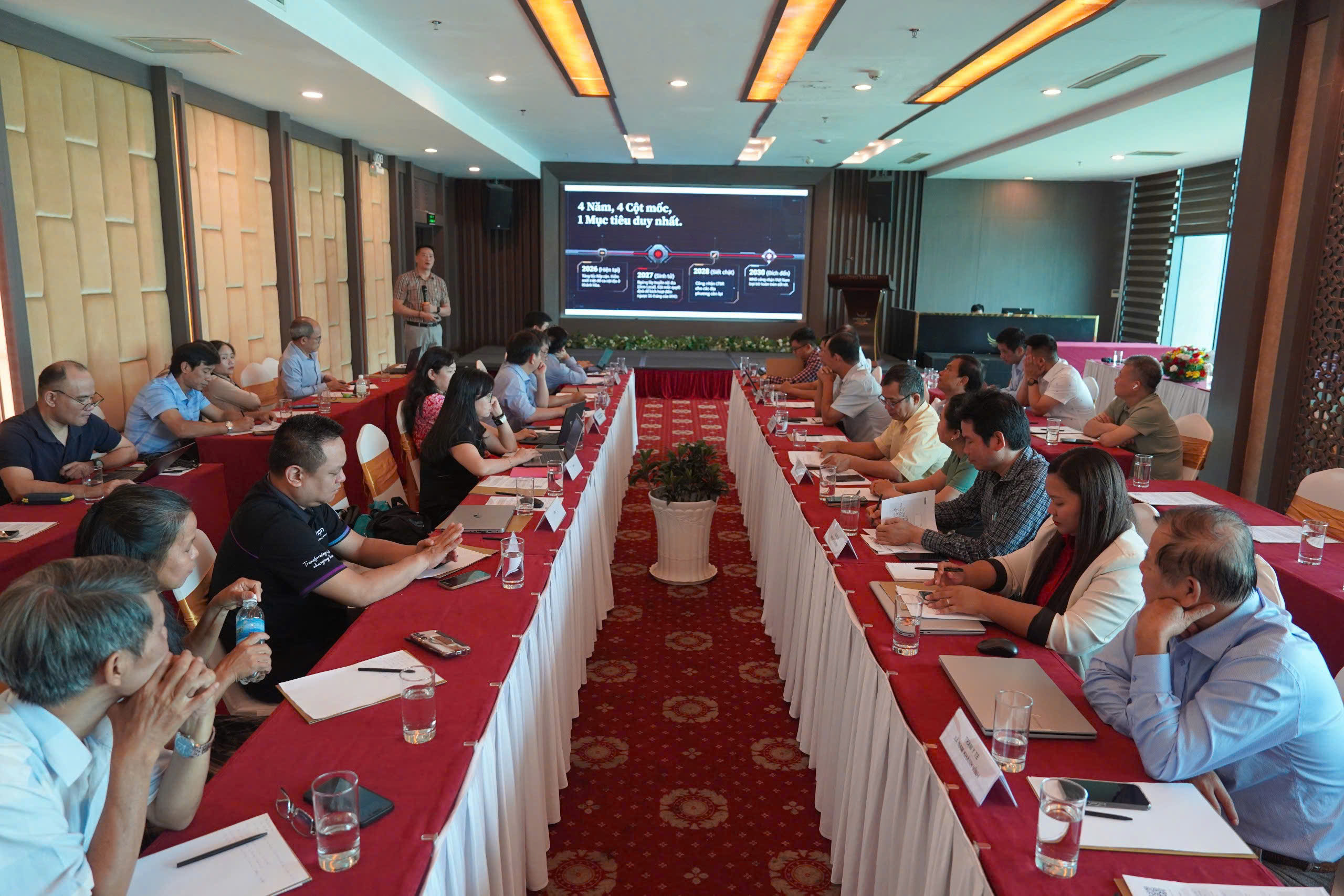
The Framework went through repeated rounds of technical consultation with NIMPE, regional malaria institutes, provincial health authorities, Centers for Disease Control and development partners before it reached the provinces. This consultation process turned out to matter as much as the document itself, with national and provincial stakeholders actively shaping the planning logic and costing methodology, as well as building the shared understanding needed to apply it later.
One Department of Health representative put it simply during a workshop: the Framework's approach was seen as relevant well beyond malaria, but as a template that other disease programmes could adapt too.

Getting Finance and Local Government into the Room
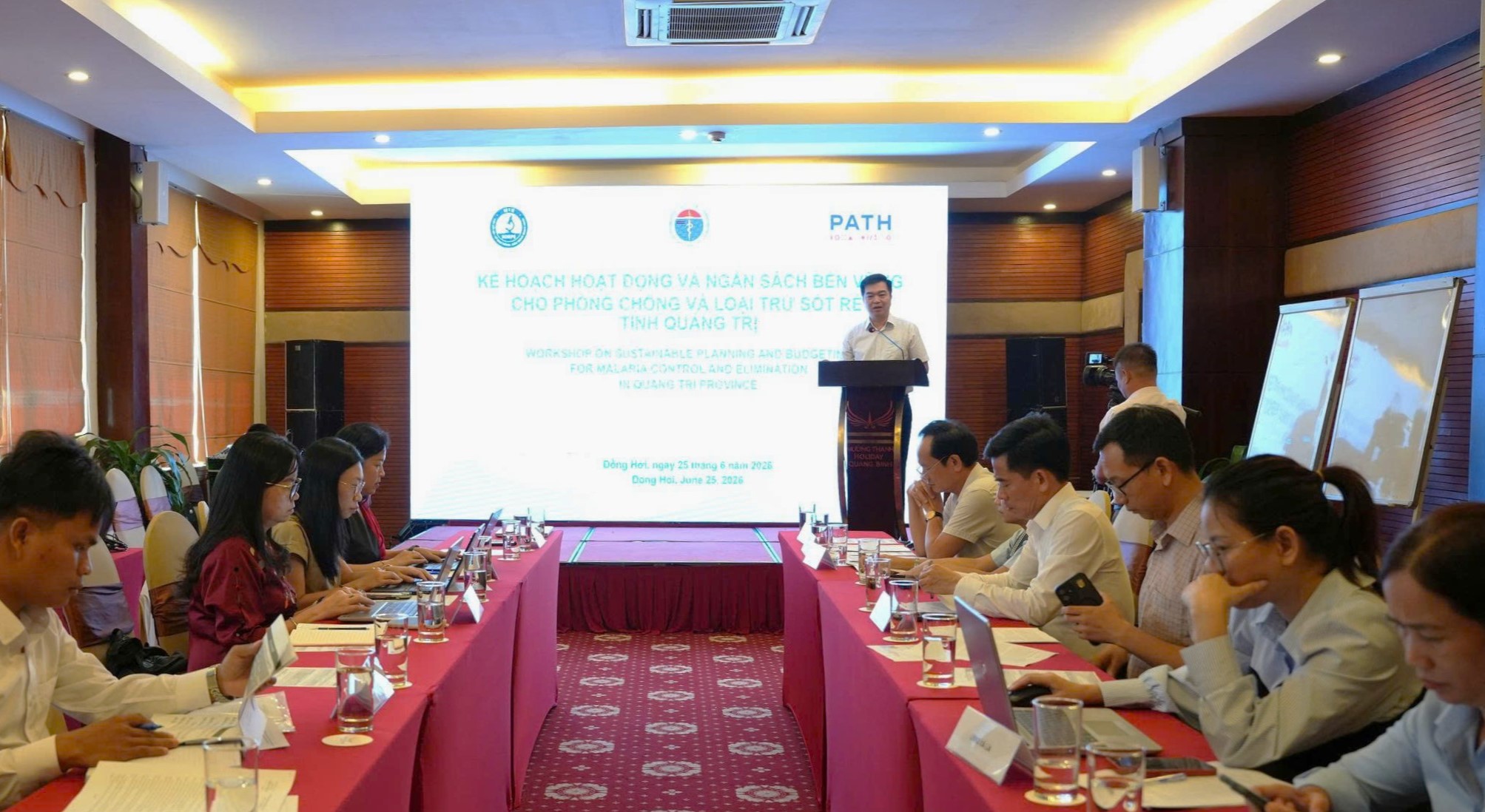
However, a technically sound plan means little if the people who approve budgets are not part of the conversation. Therefore, the pilot also included provincial advocacy workshops to bring commune People's Committee (CPC) representatives into the same room as health staff, many for the first time. This is crucial as under the reform, CPCs now hold much of the authority over approving local plans and budgets, but many were still finding their footing in the role. For several CPC representatives, the workshops were their first real exposure to the local malaria situation and to their own part in sustaining elimination efforts through budget approval.
In turn, health staff walked away with a clearer picture of how government planning and financing works. That cross-sector exchange — technical staff explaining the epidemiology, local government explaining the budget process — is what can turn a plan into a funded plan.
Speaking at the Khánh Hòa workshop, Dr Võ Hải Sơn, Deputy Director General of Viet Nam's Administration of Disease Prevention (VADP), captured the underlying philosophy: "Sustainable financing does not necessarily mean a large budget; rather, it means a budget that is allocated according to actual needs, focused on key priorities, and can be maintained consistently over time."
Looking Ahead
This pilot experience in Khánh Hòa and Quang Tri points to three priorities for scaling this work up nationally:
- Pair the Framework with hands-on coaching, not just dissemination. Provincial teams in both pilot sites were clear that a document alone doesn't change practice. Instead, they need mentoring and real planning exercises during actual budgeting cycles. As the approach moves toward national scale-up, capacity building should be piloted through a full annual planning cycle before wider rollout, so operational issues surface early.
- Institutionalise the Framework inside government systems, not alongside them. It gained traction precisely because it was designed to slot into Viet Nam's existing planning and public financial management processes rather than add a parallel, malaria-specific procedure. The next step is formal adoption within NIMPE's annual planning guidance, reviewed periodically as policy and administrative arrangements evolve.
- Treat this asa multi-year relationship, not a single project. Provincial finance departments and senior government leaders remain harder to engage consistently, largely due to competing priorities and short project timelines. That challenge will only sharpen as Viet Nam moves through its final Global Fund allocation for 2027–2029 and toward a fully domestically financed programme thereafter. Sustained financing will depend on keeping these authorities engaged from the start of every planning cycle, well before the funding gap becomes urgent.
Conclusion
This pilot experience from Khánh Hòa and Quang Tri make the case plainly: to build sustainable domestic financing for malaria elimination, it is crucial to ensure that local governments have the planning tools, the institutional confidence and the cross-sector relationships to argue for such investment on their own terms. That case is only getting more urgent. Viet Nam's new two-tier government reform has pushed planning and budgeting authority down to provinces and communes still finding their footing, just as donor funding has declined sharply. The country faces a near-future reality of fully domestically financing its malaria programmatic needs, as POR will require sustained, predictable domestic financing well past the point of reaching zero. Whether the elimination gains of the past decades hold through to 2030 will depend on whether the systems now being built in provinces like Khánh Hòa and Quang Tri are institutionalised, resourced and replicated nationwide — funded not just for the push to get to zero, but for what it takes to stay there.
* The Planning and Costing Framework for Malaria Prevention and Elimination is available in Vietnamese. Please kindly contact PATH at nmnguyen@path.org to request a copy.
You may also like