.svg)


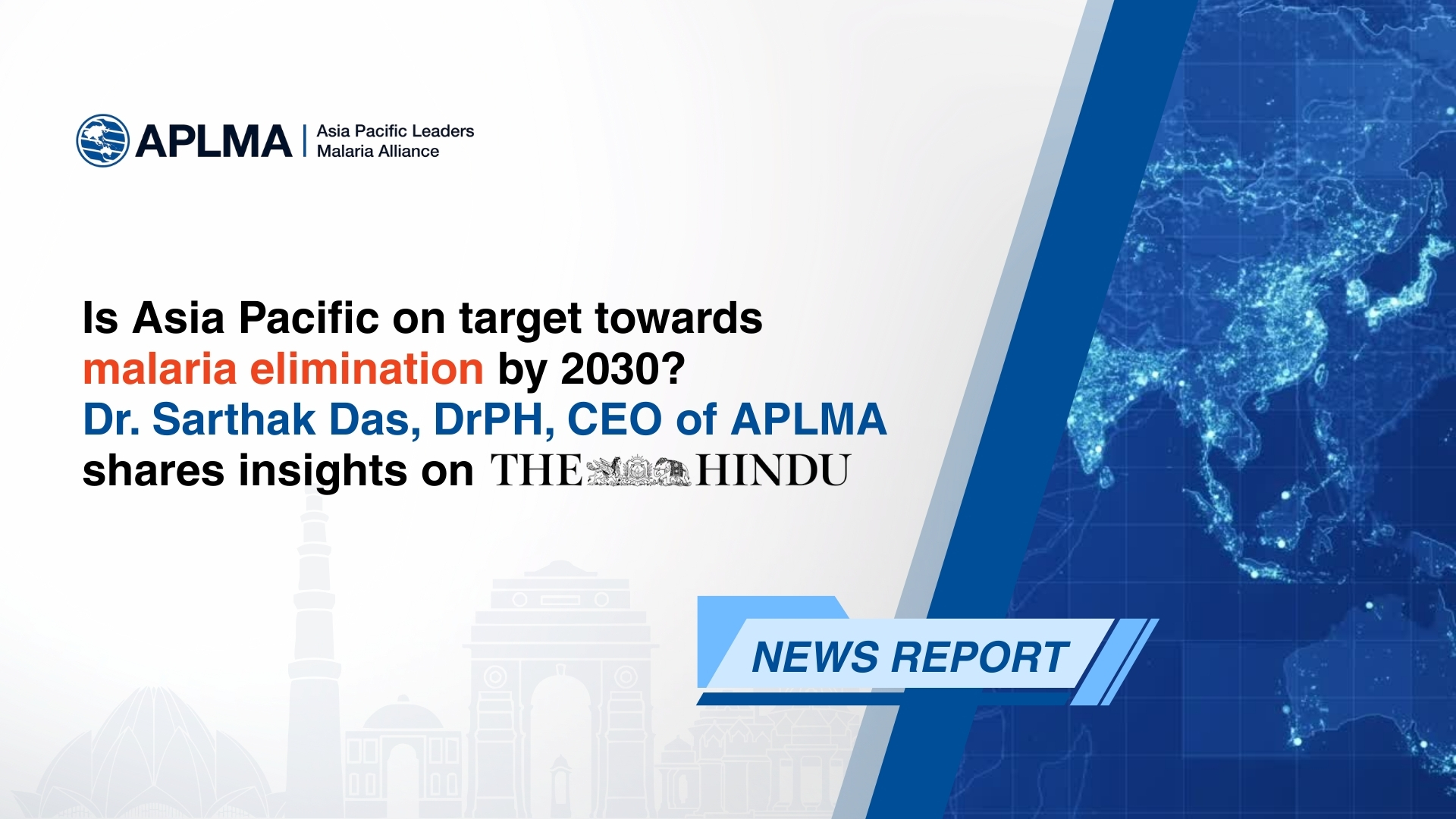
This summary draws from an exclusive The Hindu feature. The full article is available to The Hindu subscribers here.
Asia Pacific has made significant progress against malaria over the past two decades, but the path to elimination remains uneven and increasingly fragile. In an exclusive interview with The Hindu, Dr. Sarthak Das, Chief Executive Officer of APLMA, offered a holistic assessment of how close the region is to meeting its 2030 malaria elimination goal, and what still stands in the way.
The World Malaria Report 2025 presents a mixed picture. Encouragingly, Asia Pacific delivered much progress, with estimated malaria cases declining from over 9.6 million in 2023 to approximately 8.9 million in 2024. Cambodia, Lao People's Democratic Republic and Viet Nam reported sustained reduction in cases, for consecutive years.
“Asia Pacific region has made tremendous progress over the past two decades, but it is not entirely on track to meet the 2030 malaria elimination target.”
— Dr. Sarthak Das, Chief Executive Office of APLMA, in an exclusive interview with The Hindu.
Despite these successes, progress has plateaued in several high‑burden and complex settings, with some countries experiencing a resurgence of cases. India highlights this challenge clearly. While the country achieved steep reductions in malaria after 2015 and has set an ambitious goal of zero indigenous cases by 2027, recent rebounds in parts of the country suggest it is currently off the trajectory required to reach elimination.
Dr. Das explained that significant risks persist due to two major challenges: securing sustainable long-term financing and ensuring disciplined last-mile execution in high-burden countries.
In 2024, only about 42% of global malaria financing needs were met, with funding shortfalls widening further in 2025. As programs enter the most difficult and expensive phase of elimination, shrinking resources are forcing scale‑backs of proven interventions, significantly increasing the risk of resurgence, particularly in high‑burden areas of Asia Pacific. Malaria elimination requires sharper geographic targeting, surveillance as a core intervention, and renewed continuity of financing and programs delivery.
Eliminating malaria is not only a moral responsibility but also an economic necessity, as demonstrated by the 44 countries that have successfully eliminated the disease. For Asia Pacific, sustained leadership, domestic investment and disciplined execution through the last mile will determine whether the region achieves elimination by 2030.
You may also like